
09.10.2024
David Baker and the power of distributed computing.
An example of how distributed computing helps to search for drugs for diseases.
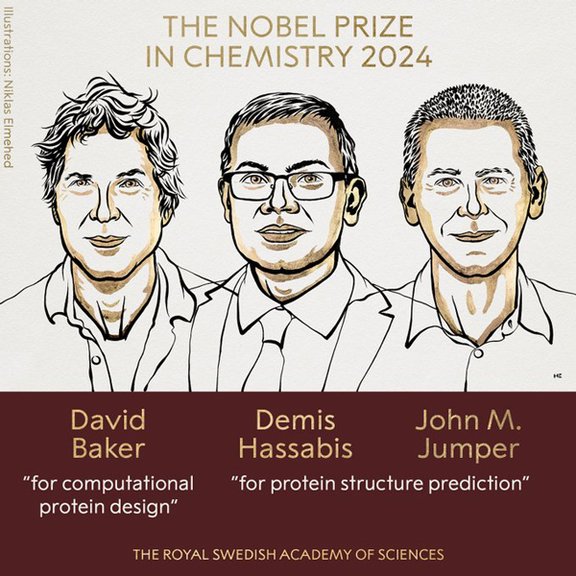
David Baker — one of the leading scientists in the field of computational biology and bioinformatics. He heads a laboratory at the Institute for Protein Design at the University of Washington and is known for his groundbreaking work in protein structure prediction and the development of new molecules. His research helps solve global problems such as finding drugs for diseases, creating new materials, and even combating climate change.
The Role of Distributed Computing
One of the key tools used by Baker is distributed computing. This technology allows the aggregation of computing power from thousands of computers worldwide to solve complex tasks. Instead of using a single supercomputer, scientists can harness the resources of ordinary users who voluntarily provide their computers for scientific calculations.
One of the most well-known projects involving Baker is Rosetta@Home. This project uses distributed computing to model protein structures and develop new drugs. For example, during the COVID-19 pandemic, Rosetta@Home helped scientists study viral proteins and search for potential treatments.
How Does It Work?
- Users install special software on their computers that runs in the background.
- When the computer is idle, the program uses its resources to perform complex calculations.
- The results are sent back to the laboratory, where scientists analyze the data.
Why Is It Important?
- Time Savings: Distributed computing allows calculations that would take years on a single computer to be completed in just a few months.
- Accessibility: Anyone with a computer and an internet connection can contribute to science.
- Global Collaboration: Projects like Rosetta@Home bring together people from around the world to solve common problems.
David Baker and his team demonstrate how technology and collective effort can change the world. Thanks to distributed computing, science becomes more accessible to everyone, and complex tasks become solvable. In recognition of their achievements in this area, the Nobel Prize in Chemistry for 2024 was awarded to David Baker, Demis Hassabis, and John Jumper.
11.10.2024
Scientists have created the most detailed map of an insect brain: 50 million neural connections.
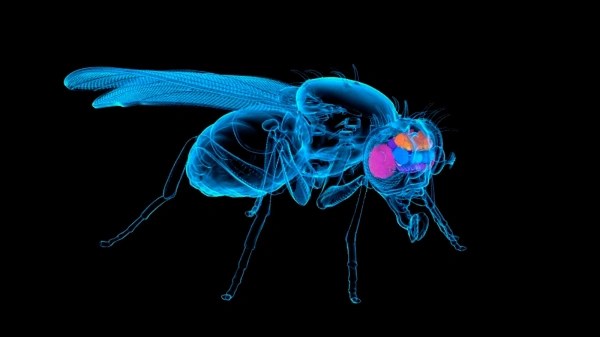
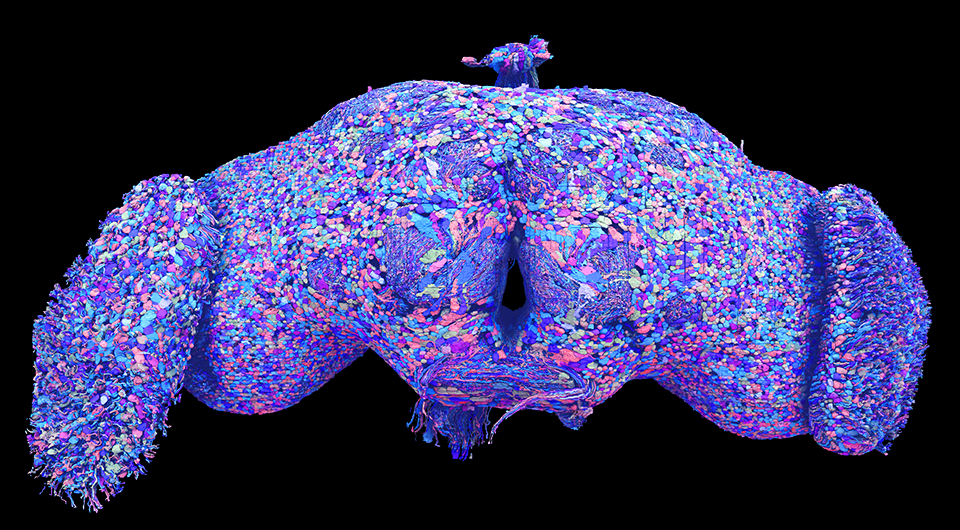
Researchers from Princeton University have, for the first time, compiled a complete map of the neural connections of an adult insect, mapping over 50 million synapses. This discovery could revolutionize neurobiology and help us better understand the mechanisms that control behavior not only in insects but also in humans. This is reported by The Guardian with reference to Nature.
Photo: Amy Sterling / FlyWire / Princeton
Fruit fly
Why the Fruit Fly?
The fruit fly (Drosophila melanogaster) has become a subject of study due to the combination of the relative simplicity of its brain and enough complexity to yield valuable data. For many years, the fruit fly has been a model organism in genetics and neurobiology thanks to its rapid reproduction and well-studied genome.
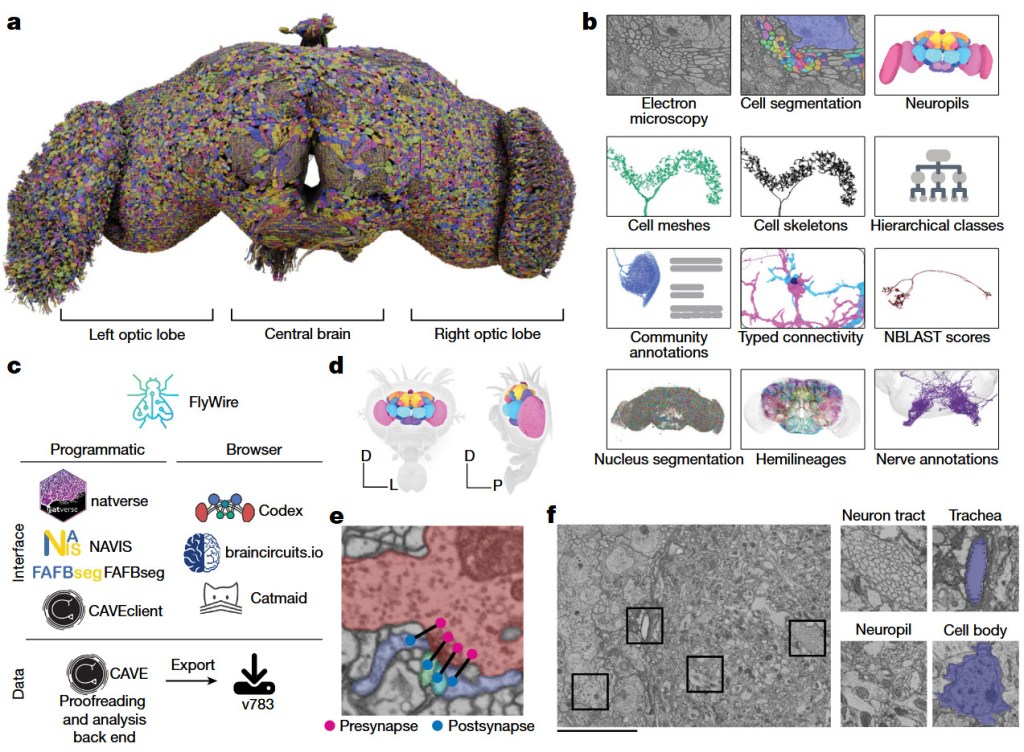
Researchers sliced the brain of a female fruit fly into 7,000 ultrathin sections, each of which was recorded using electron microscopy. Then, artificial intelligence analyzed the images and reconstructed the map of connections between each neuron and synapse.
Key Discoveries
- Types of Neurons. Scientists identified two key types of neurons:
- «Interrogator» neurons that gather information from various regions of the brain.
- «Broadcaster» neurons that transmit signals to coordinate the functioning of the entire neural network.
- Behavioral Circuits. It was discovered that a specific group of neurons is responsible for stopping the fly’s movement during walking. This could provide insight into the mechanics of decision-making and responses to external stimuli.
- Simulation of Information Processing. The second part of the study involved creating a computer model of a portion of the fruit fly’s brain. Scientists managed to identify neural circuits involved in processing taste signals.
Impact on the Future of Science
Dr. Anita Devineni from Emory University described the creation of the connectome (the complete mapping of neural connections) as an “epic achievement.” Now, scientists plan to apply this method to study more complex organisms. Work is already underway to create a similar map of the mouse brain, which could significantly advance our understanding of the principles governing the mammalian nervous system.
When Will the Human Brain Map Be Available?
Although creating the human connectome remains a distant prospect, this project provides key clues for future research. The human brain contains approximately 86 billion neurons, and the number of synapses exceeds 100 trillion, making its mapping an extremely complex task. However, advances in artificial intelligence technologies and improved visualization methods offer hope that in the future scientists may obtain an equally detailed map of the human brain.
This breakthrough demonstrates how rapidly neurobiology is advancing and opens new horizons for understanding the brain and its functions. Similar research may one day help us unravel the mysteries of consciousness and the mind.
To the top
 GÉNESIS-ONLINE.COM